
Arrangements for children
Ask about discussing routines, time with each parent, holidays or communication. You can begin with the issue that feels most immediate.
Contact us
You may have a question about mediation, need to discuss a MIAM, or simply want to understand where to begin. Contact Family Mediator to ask about the next step.
Where to begin
Ask about discussing routines, time with each parent, holidays or communication. You can begin with the issue that feels most immediate.
Ask whether mediation could help you discuss financial or property questions. Keep your first enquiry brief; ask how any documents should be provided later.
Ask about the first assessment meeting, online appointments or separate discussions through shuttle mediation. Suitability needs to be considered for your circumstances.
Before you call
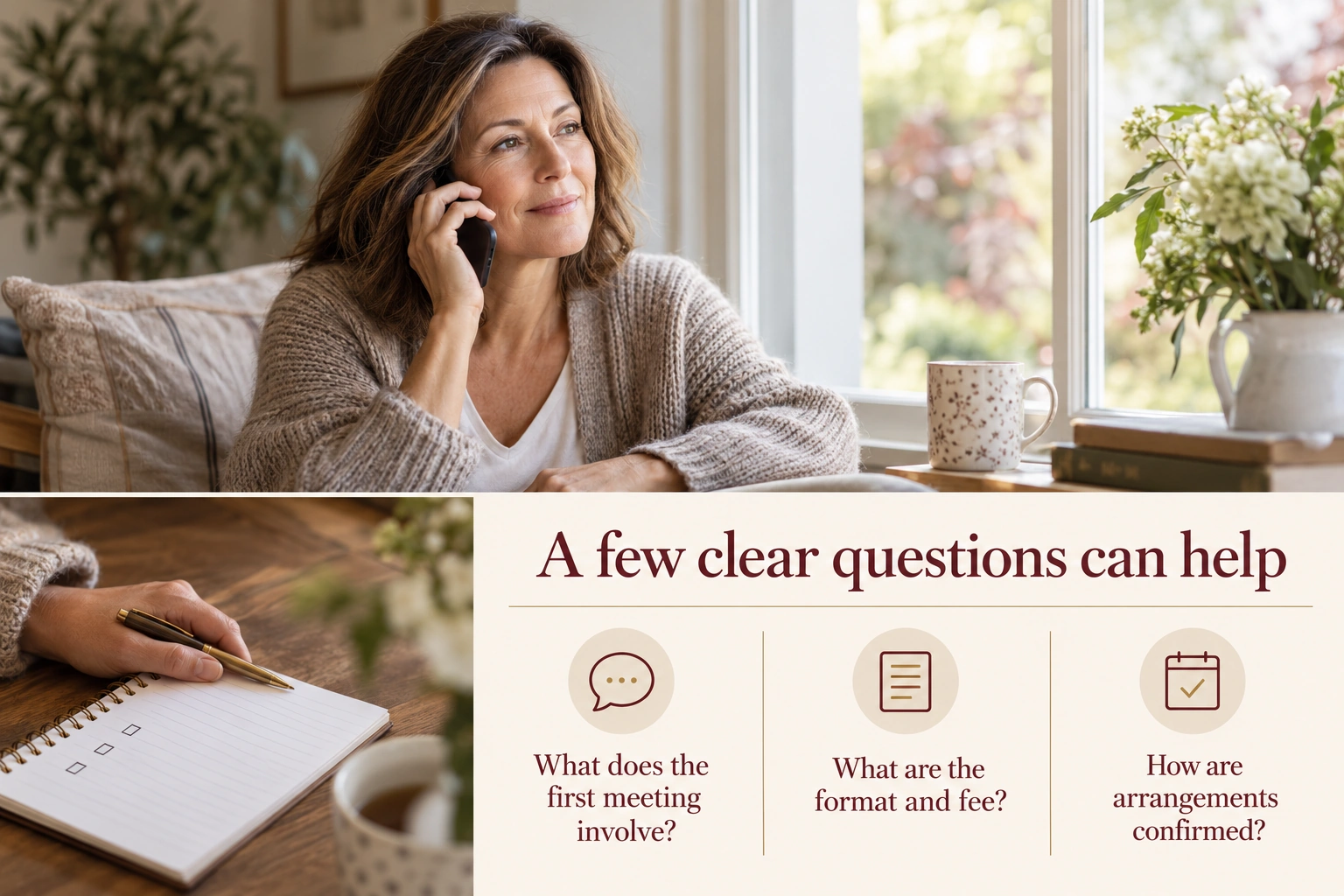
It may help to write down two or three questions before you call. You could ask what the first appointment involves, what information is needed and how you will know whether mediation is appropriate.
You do not need to decide how every family issue should be resolved before making an enquiry. Start with the kind of help you are looking for and ask what the next conversation would cover.
Your circumstances
If possible, make the call somewhere you can speak privately. If returning a call, leaving a message or contacting you in a particular way could cause difficulty, raise that before sharing further details. Ask what contact arrangements can be agreed.
There is no enquiry form on this website. Please do not try to send documents or detailed personal information through a page link.
If there has been domestic abuse, intimidation or a concern about a child’s safety, let the mediator know privately when it is safe to do so. Mediation may not be suitable, and a different meeting format does not automatically make it appropriate.
Ask about accessibility, language or communication needs before arranging a session. Availability and any arrangements need to be confirmed directly.
Clear expectations
Calling the number opens a route to an enquiry; it does not complete a booking or confirm that mediation is suitable. Ask for clear appointment details, current fees and applicable terms before agreeing to a session.
If you have a court deadline or need advice about your legal position, seek independent legal advice. Reading this page or making an enquiry does not extend a deadline.
You can also read about Family Mediator or explore the services page before deciding what to ask.
A useful first call
When family circumstances feel unsettled, it can be difficult to know what to say first. You do not need to describe every disagreement or explain the full history in an initial enquiry. You can simply say that you are looking for information about mediation and name the broad subject you want to discuss. For example, you might be asking about arrangements for children, finances following separation, or whether a MIAM could be relevant.
If another person is involved, you do not need to speak on their behalf or predict whether they will take part. Ask how invitations or contact with the other participant are handled, and what happens if one person is not ready to consider mediation. Each person can make their own decision about participating.
It may help to take a pause and write down the most important question you want answered. If you become unsure during the call, you can ask for an explanation in plain language or ask what information can be provided in writing. You can also ask to call back after you have had time to think. An enquiry is not an agreement to mediate.
Taking these one at a time can make the call easier. You do not have to decide on future mediation sessions during your first enquiry.
Privacy and contact
A telephone conversation can involve personal information. Before describing sensitive details, you can ask who will hear the information, how it will be recorded and what privacy information is available. This website does not provide a secure upload facility or an enquiry form. Do not send identity documents, court papers, financial statements or detailed accounts of family events through an ordinary link or unverified address.
If you are calling from a shared phone, using a device another person can access, or relying on someone else to help you make contact, consider whether the call history, voicemail or notifications could be seen by another person. You can ask the service to explain what communication options are available, but this page cannot promise a particular safe-contact procedure. Make contact only when doing so feels safe for you.
If you need an adjustment, interpretation or a different way to communicate, you can raise this before an appointment is arranged. Examples might include extra time to consider information, written joining instructions, a communication aid or clarification of technical requirements. Availability will depend on the service and needs to be confirmed directly. You are entitled to ask questions about access without first sharing more personal information than is necessary.
Family mediation is not an emergency response. If anyone is in immediate danger, contact the appropriate emergency service. If you are concerned about a child’s immediate safety, use the relevant safeguarding or emergency route rather than relying on a website enquiry. For urgent legal deadlines, seek independent legal advice promptly; a call to a mediator does not stop a deadline running.
Choosing whether to proceed
A first conversation is a chance to find out what is offered and what it may involve. Ask for enough information to decide whether you want to arrange an assessment meeting. You may want to compare the practical arrangements, ask how the mediator approaches impartiality and understand how the process differs from receiving advice from a solicitor. You can take time to consider what you have learned.
If you decide not to proceed, ask whether any action is needed to close the enquiry and whether any information you shared will be retained. If you do proceed, ask how your appointment will be confirmed and what document describes the service terms. Do not rely on an informal assumption about costs, cancellation or confidentiality; ask the provider to explain the applicable arrangements before agreeing.
The mediator’s role is to support a structured conversation, not to decide who is right or impose a settlement. You remain responsible for deciding whether a proposal works for you. Where you need advice about legal rights, court processes, tax, pensions or financial consequences, consult a suitably qualified independent adviser. A mediator may help people identify questions for their advisers, but that is different from providing individual advice.
Some matters may not be suitable for mediation, and a separate or online format does not automatically resolve every concern. A careful assessment should consider whether people can participate freely and safely. If you feel pressured, you can say so privately, ask what alternatives exist or decide not to continue. Your enquiry does not commit you to a particular outcome.
A simple record
Keep a short note of the answers that affect your next decision. A useful enquiry record can have five headings: the service discussed; the person you spoke with; any proposed date; the quoted cost; and the question still waiting for an answer. You do not need to write down the sensitive details of the family situation.
If you hear a date, distinguish a suggestion from a confirmed appointment. If you receive a price, note whether it is per person, per session or for a particular item of work. Read back the details that matter so the person answering can clarify any misunderstanding.
Give yourself one clear next action, such as reading the information supplied or checking access to a proposed meeting format. Keep the note somewhere appropriate for your circumstances, especially if someone else has access to your device. The note is your practical reminder, not a booking confirmation or an agreement to mediate.
Your next step
Call to ask about mediation and the next step for your situation.