
Your first enquiry
A chance to ask about the service and how to arrange an appointment. Making an enquiry is not itself attendance at a MIAM, and does not complete a court requirement.
Book a MIAM / consultation
To enquire about a MIAM or an initial conversation, call Family Mediator. This page explains what to ask and how an enquiry differs from an agreed appointment.
A clear distinction
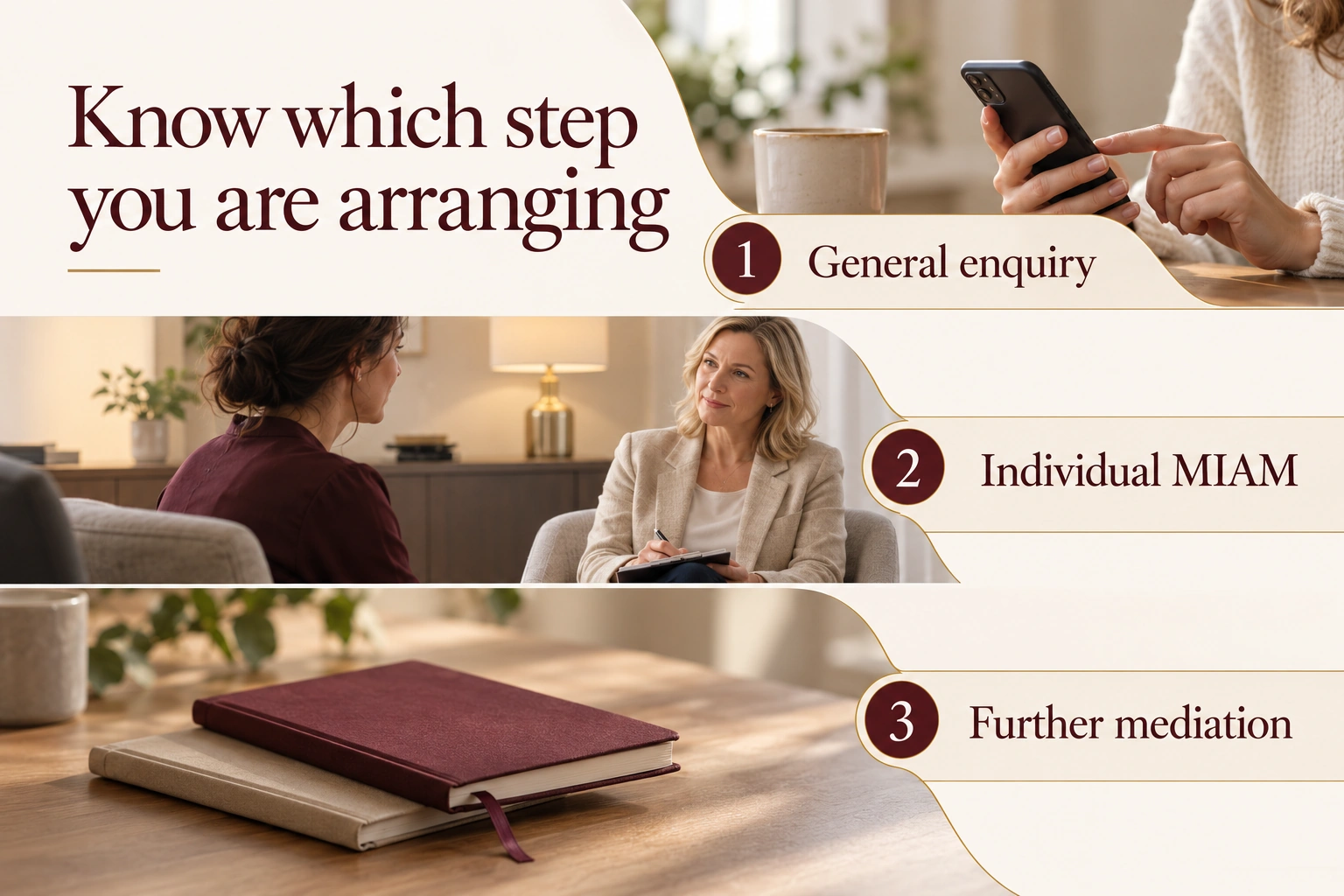
A chance to ask about the service and how to arrange an appointment. Making an enquiry is not itself attendance at a MIAM, and does not complete a court requirement.
A Mediation Information and Assessment Meeting considers your situation, explains mediation and other options, and explores suitability. Ask what the meeting will involve before agreeing a date.
If mediation is suitable and participants wish to proceed, further sessions can be discussed. The first meeting does not guarantee an agreement or oblige you to continue.
Making an enquiry

Say whether you want information about mediation, need to ask about a MIAM, or are following up an earlier conversation. Mention any relevant deadline so that you can ask whether an appointment can be arranged in time. Do not assume an enquiry secures a date.
Check whether an online or in-person meeting is being discussed, how long to allow and what the total fee includes. Ask about any further session or document charges, and whether financial support may be relevant to your circumstances. Eligibility and funding are not confirmed by this page.
Before making plans, ask for the date, time, attendance arrangements and fee to be confirmed. Clarify how to change or cancel the appointment and what information, if any, you should provide beforehand. There is no online payment or instant confirmation on this website.
Preparing for a MIAM

You can use the first meeting to explain the issues you hope to address and ask what the options involve. You do not need to arrive with an agreed parenting plan or financial settlement.
A short list may help you remember your priorities. For example, you might want to discuss how holidays are organised, what information is needed for financial discussions, or how future communication could work.
Ask the mediator which documents are needed and how they should be shared. Avoid sending detailed financial records or sensitive information before the appropriate arrangements have been explained.
Meeting arrangements

Ask about the video platform, joining instructions and the equipment you will need. Choose a place where you can speak privately and plan for interruptions. If privacy at home is difficult, raise that before agreeing to an online meeting.
It can help to check your connection and audio beforehand. Ask what to do if you cannot join or lose the connection, rather than assuming a particular fallback arrangement.
Tell the mediator privately about safety concerns or anything that may affect your ability to take part freely. You can ask about separate conversations and the shuttle format.
Remaining in separate spaces does not automatically make mediation suitable. A history of abuse or coercion needs careful assessment; you should not feel pressured into mediation because an alternative format exists.
Court and legal questions
In England and Wales, a MIAM is generally required before certain family court applications, unless an exemption applies. This is not a rule that everyone must mediate. The requirements depend on the application and circumstances.
If you need a court form, ask what the mediator is authorised to provide and what is required in your case. Do not assume that an enquiry, a short telephone conversation or simply reading this page results in a certificate.
A mediator facilitates discussion. Independent legal advice is separate and can help you understand your rights, deadlines and the implications of any proposed agreement.
What a MIAM is for
A Mediation Information and Assessment Meeting is commonly called a MIAM. It is an individual meeting with a mediator to discuss the situation, understand what mediation involves and consider whether it may be suitable. The mediator can explain the process and discuss other options in general terms. The meeting is not a mediation session between both participants, and an initial telephone enquiry is not itself a MIAM.
A MIAM is an opportunity to ask questions without first agreeing to continue into mediation. You can describe the broad issues you hope to address, ask how the service works and raise anything that could affect your ability to take part. The mediator considers suitability in light of the information available. If mediation does not appear appropriate, you can ask what other routes might be considered, while obtaining independent advice about your circumstances.
Each person may have an individual assessment. How a provider arranges contact, the timing of meetings and any documents required should be checked directly. Do not assume that the other participant has been contacted, invited or assessed simply because you have enquired. Ask what information can be shared and what the next step would be after your meeting.
The meeting does not decide the dispute, require you to accept a proposal or guarantee that the other person will attend. It is not a substitute for legal advice. If you need guidance on court procedure, legal rights or the effect of a proposed agreement, speak to an independent solicitor. The mediator can support an informed discussion, but does not represent either participant.
Is mediation right for me?
Whether mediation is appropriate depends on the particular people, issues and circumstances. There is no single answer that can be given from a web page. The mediator may need to understand what is in dispute, whether each person can make choices freely, what information is available and whether a safe and workable meeting format can be arranged.
Tell the mediator privately about concerns that may affect participation. These could include fear, intimidation, coercive behaviour, a significant imbalance in the ability to speak freely, or concern about a child’s safety. You can ask how that information will be handled and what confidentiality limits apply. Share sensitive information only through a channel the provider has explained.
Separate meetings, online appointments or shuttle mediation may be considered, but none is an automatic guarantee of suitability. A different format does not remove the need for an individual assessment. You should not be pressured to participate because a particular format is available or because the other person wants mediation.
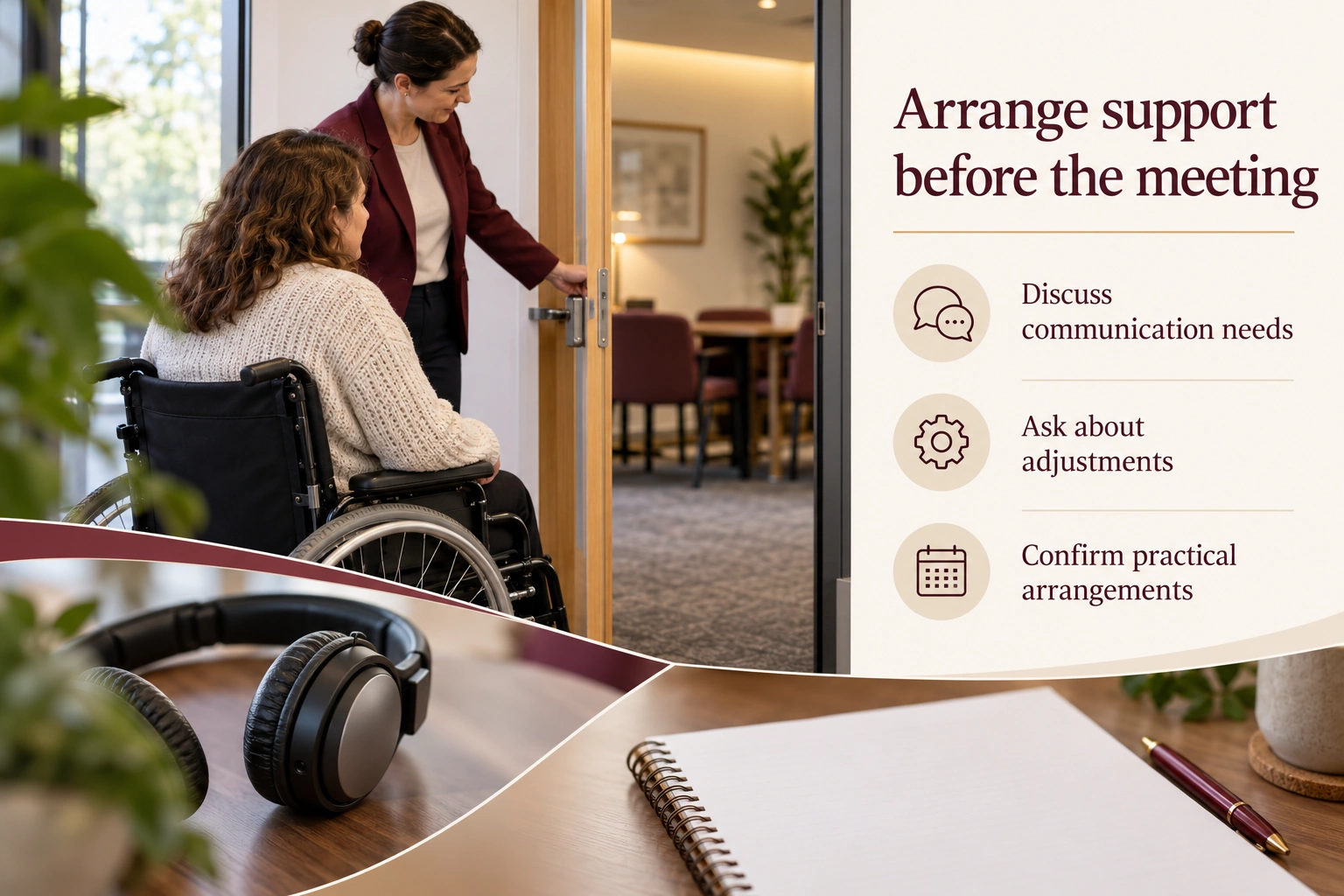
It may also be useful to explain whether either person has difficulty accessing technology, communicating in the proposed language, arranging a private space or understanding written materials. Ask about adjustments and interpretation before agreeing a date. The provider will need to confirm what can be offered.
If urgent protection, a court order or immediate action is needed, ask a solicitor or appropriate public service for advice promptly. Mediation does not provide emergency protection and an appointment does not suspend a deadline. A MIAM may be relevant to some court processes, but a general enquiry cannot establish the requirements in an individual case.
There may be reasons to pause while someone obtains information or advice. The assessment can help identify those questions; it does not force you to decide immediately whether to continue.
Preparing without over-preparing
You do not need to write a complete statement or prepare a finished agreement before a MIAM. It can be useful to note the main question you want answered, any immediate practical concern and the outcome you hope to understand. You may want to jot down relevant dates, such as an upcoming court deadline, but do not assume the meeting changes that deadline.
If your concerns involve children, you could think about the routines or decisions causing difficulty, what is working well and what information may help clarify possible options. If you are asking about finances, you can identify the broad subjects involved, such as housing, pensions, savings or debts. You generally do not need to bring every document to an initial enquiry; ask the provider what, if anything, is required for your appointment.
It may be helpful to reflect on what you do not yet know. For example, a figure may need to be checked, a document may be unavailable, or a proposal may require advice. Acknowledging uncertainty is preferable to guessing. Ask how missing information can be identified and what the process expects from each participant.
You can ask the mediator to explain unfamiliar terms or repeat information. If you need time to consider an answer, say so.
Fees and appointment details
This page does not state a current fee, promise a free consultation or confirm eligibility for funding. The cost may depend on the type and length of appointment and the provider’s current arrangements. Before agreeing to a date, ask for the total amount, what it covers, whether it is charged per person or per session, and whether any separate charges could apply. Ask when payment is due and which payment methods are accepted.
Also check the appointment’s date, start time, expected length, format and location or joining instructions. Ask whether the appointment is an assessment meeting or another type of consultation. If anyone else is expected to attend, clarify who and whether they will be in the same room or connect separately.
Understand how to change or cancel the appointment, what happens if you are late or cannot join, and whether a missed meeting may have a cost. The applicable terms need to be provided by the service provider; do not assume this page sets them. Ask for the details in writing so that you can refer back to them.
When making an enquiry by telephone, give only the information needed to discuss the appointment. Ask how personal details are used, who can access them and where the privacy notice is available. This page has no appointment calendar, payment checkout or form. A click on the phone number opens your device’s calling application; it does not complete a booking.
Do not treat a date as reserved until the provider confirms it. If you have an upcoming legal deadline, make it clear when you enquire and seek independent legal guidance about what steps are required. Do not rely on availability statements, voicemail or an unanswered call as confirmation.
Meeting format
The service information describes online mediation. Ask which video platform will be used, how the link will be sent, what device and connection are required and whether you need to install anything. Check if you can access the platform privately and whether the screen, audio or captions meet your needs.
Choose a quiet place where others cannot overhear sensitive discussion. If a private room is not available, tell the mediator before accepting the format. Ask what to do if your connection drops and whether a telephone option exists; do not assume a particular backup plan.
If you need to share documents, confirm the provider’s secure process. Do not send financial or identity records through an ordinary email or website link unless the provider has explained that channel and its safeguards.
Family Mediator’s service information also describes shuttle mediation, where the mediator speaks with participants separately and carries the discussion between them. Ask how the separate appointments are scheduled, what information may be relayed and how you can correct any misunderstanding.
Shuttle is a meeting format, not a decision about whether mediation is suitable. Tell the mediator if you have concerns about safety, pressure or being able to speak freely. Ask how suitability will be assessed and what other routes may be available. You can decline a format or ask for more information before agreeing.
Whatever the format, participants should understand who will attend, how the discussion is managed and what records may be made. Ask about confidentiality and its limits before sharing sensitive details.
Court applications and MIAMs
In England and Wales, a person making certain family court applications will generally need to attend a MIAM first, unless an exemption applies. The rules depend on the type of application and the circumstances. This does not mean that everyone must mediate, that every dispute is suitable or that an agreement has to be reached.
If you are unsure whether you need a MIAM, whether an exemption may apply or what evidence a court requires, seek independent legal advice. Do not rely on this page to determine your eligibility or the correct court form. The mediator can explain what they are able to provide after an assessment, but a phone enquiry does not itself create a certificate or satisfy a court requirement.
Deadlines and court directions can be important. Booking or attending a mediation appointment does not automatically pause a court timetable, extend a filing date or change an existing order. If time is short, promptly ask a solicitor or the court about the steps that apply to you.
A MIAM is also an opportunity to hear about mediation and consider its suitability. Even where it is required before an application, further mediation is not automatically compulsory. The choice to participate in mediation remains a separate matter, subject to applicable law and procedure.
After the first meeting
At the end of a MIAM, you can ask the mediator to explain the options discussed and any possible next step. Depending on suitability and each participant’s wishes, that could include arranging further mediation, considering a different format, obtaining independent advice or deciding not to proceed. The available routes depend on circumstances and cannot be guaranteed by this page.
If you want to continue, ask who needs to be contacted, how the first joint or separate session would be arranged, what preparation is expected, and whether fees or terms differ from the assessment meeting. Clarify what documents may be produced and how they should be understood. A written summary of discussions is not necessarily a legally binding agreement.
If you do not want to continue, you can ask what happens to your information and whether any further action is required. You may want to discuss other options with a solicitor, especially where court proceedings are underway or a deadline applies. If circumstances change, you can ask whether a future assessment is possible.
Where financial proposals are reached, they are not automatically legally binding. Independent legal advice can help you understand whether further formal steps, including a consent order, may be appropriate. The legal effect in your case requires tailored advice.
There is no requirement to treat a first discussion as a final decision. Take time to consider what you heard, ask for clarification and seek advice before accepting any proposal that you do not understand.
Common questions
No. This is an information page and its telephone link opens your calling application. No date is reserved until the provider confirms the appointment directly.
No. An enquiry is a way to ask about the service and arrangements. A MIAM is an assessment meeting with a mediator. Ask the provider to confirm what kind of appointment is being offered.
A MIAM gives you an opportunity to understand the process and discuss suitability. It does not guarantee that mediation is appropriate or that you will continue. Ask about the next steps and decide after you understand them.
Ask the provider how individual assessment meetings are arranged. Do not assume another participant has been invited or assessed because you have made an enquiry.
Raise the concern privately before agreeing to an appointment. Ask about shuttle or separate arrangements and how suitability is assessed. A separate format is not an automatic guarantee that mediation is right for you.
The mediator facilitates discussion and does not represent you. Ask a solicitor for individual advice about rights, court procedure and the legal effect of proposals.
This page does not publish an approved current fee. Ask the provider for the full cost, what it includes and any additional charges before agreeing to a date.
Tell the provider, but seek independent legal advice promptly. A mediation enquiry or appointment does not automatically pause a deadline.
Before you decide
It may help to think about what a useful first meeting would give you. Perhaps you want to understand whether mediation could address a particular issue, learn how a MIAM differs from a joint session, or find out what happens if the other person is unwilling to take part. You may simply need to understand the cost and format before deciding whether to arrange a date. These are all reasonable questions to raise.
Consider whether you can speak privately, access the proposed technology and understand the information being discussed. If you would need an interpreter, an accessible document or a different communication arrangement, ask about it early. The provider should confirm what can be offered and whether any practical arrangements change the appointment plan.
Think about whether you need independent advice before the meeting. If court proceedings are underway, bring any relevant deadline to the provider’s attention, but do not expect mediation to extend it. A solicitor can explain the legal steps and the effect of any existing order. If the issue involves financial decisions, independent financial or specialist advice may be useful alongside mediation.
You may also want to identify a support person to speak with after the appointment. The provider should explain who is permitted to attend the meeting; do not assume that a friend or relative can participate. You can ask what support is available while keeping the mediator’s role and the privacy of the other participant in mind.
After considering these practical points, you can decide whether to make an enquiry. You do not need to reach a conclusion about mediation before speaking to the provider. A clear answer about the first meeting may be enough to help you choose what to do next.
Your appointment record
A simple appointment record can help separate confirmed information from things you still need to ask. Use separate headings for the date and time, meeting type, attendance format, expected length, quoted price and contact route for changes. Put an unanswered question in its own space rather than filling the gap with an assumption.
For example, “online meeting discussed; platform not confirmed” is more accurate than treating a familiar video application as the agreed platform. Likewise, “price quoted for an assessment” should not become a budget for all future mediation sessions unless the provider has explained that scope.
Before the appointment, compare the record with the confirmation you receive. If they differ, ask which information is correct. This can help identify a practical misunderstanding early without having to repeat the history of the family dispute.
Your record is a personal preparation aid. It does not establish that the service has accepted a booking, replace applicable terms or prove that a proposed family arrangement is binding. Store it with appropriate care and use it to keep the next conversation focused on the details that remain open.
Your next step
Call Family Mediator to discuss the next step. Please confirm the appointment details directly before treating a meeting as booked.